About Us

Learn more about the history of SAVA, our mission and goals, and how we aim to serve our members and the greater public.

Caring for the welfare of animals and mankind

The South African Veterinary Association aims to serve its members and to further the status and image of the veterinarian. We are committed to upholding the highest professional and scientific standards, and to utilising the professional knowledge, skill and resources of our members, to foster close ties with the community and thus promote the health and welfare of animals and mankind.

01.
Our Vision

To be established as the professional body recognised and respected by all stakeholders, representing a united profession, acknowledged as the leaders in animal health, production and welfare.

02.
Our Purpose

SAVA is an association for registered members of the veterinary profession and represents the interests of its members, and in so doing, the interests of animals and the public.

03.
Our Objectives

To promote and protect the collective interests of its membership in good standing; to promote veterinary science and the veterinary profession in all its aspects; and to serve our country, South Africa.

What does the SAVA do for its members, for our colleagues, for the public?

When one reads the authorative book by Bigalke and Verwoerd "Onderstepoort 1908 – 2008", one is immediately impressed by the essential role that veterinarians played not only in the control of animal diseases but as pillars of society that made economic growth and human survival possible. And this is even more so today, also embarking into the spheres of sport, companion animals and wildlife.

Cardinal to success is knowledge. The distribution and accessibility of new information is thus a major objective of the SAVA. This is accomplished by organising national, regional and specialised congresses continuously and distributing contemporary information through its publications the “Scientific Journal of the SAVA” and the more popular “VetNews”. In addition, the SAVA solicits Continuing Professional Development articles from specialists that are published in VetNews. The questions can be answered electronically and is a convenient way to earn CPD points. Similarly, it is realised that the profession functions within a particular social, economic and legal environment. This poses threats but also provides opportunities to promote the collective interests of all veterinarians. This requires consistent and intimate engagement with official organisations such as the Faculty of Veterinary Science, the Veterinary Council, State Departments such as Agriculture and Health; all of whom command legal authority that can affect the profession either positively or negatively. In the same vein, international co-operation is of vital importance in order to collectively pursue the concept of ‘One world One health One medicine’ and ensure food safety and security.

As responsible individuals, veterinarians—both collectively and individually—also have a moral duty toward the human and animal communities in which we live. Therefore, it is our calling to provide guidance to the public regarding healthy human–animal relationships, whether these involve production animals, sport animals, or companion animals. To achieve this requires an ongoing process of policy development and effective communication with the public. As proof of our social responsibility, the “Community Veterinary Clinics” (CVC) programme was developed, which currently provides a very successful service to underprivileged communities that would otherwise not have access to veterinary care. The SAVA is also increasingly focused on delivering unique services to its members, such as professional insurance, vehicle purchase benefits, and client credit control.

Finally, major breakthroughs in science and otherwise are often made by dedicated and enthusiastic individuals and it is imperative to accord them commensurate recognition. The SAVA has therefore over the years developed awards such as the Gold Medal, President’s Award, Boswell Award, Soga Medal and others, to give recognition to members who have made major contributions to the standing of the Association and the profession.

“Prestinae Vurtitus Memores”

We, the members of the Association, resolve at all times:

  • To honour our profession and the Veterinary Oath
  • To maintain and uphold high professional and scientific standards
  • To use our professional knowledge, skill and resources to protect and promote the health and welfare of animals and humans
  • To further the status and image of the veterinarian and to foster and enrich veterinary science
  • To promote the interests of our Association and the fellowship amongst its members

History of SAVA

The history of the South African Veterinary Association (SAVA) had a useful prelude and a very eventful course. The first step towards the establishment of a local organised veterinary profession dates from the inauguration of the Transvaal Veterinary Medical Association (TVMA) on 16 February 1903 in Johannesburg. Capt. J. Irvine-Smith was elected as its first President. The Cape of Good Hope followed with the Cape of Good Hope Veterinary Medical Society, later referred to as the Cape Veterinary Medical Society (CVMS), on 1 November 1905 in Cape Town with D. Hutcheon as President. The inaugural meeting of the Natal Veterinary Medical Association (NVMA) took place in Pietermaritzburg on 19 November 1909 with Col. H. Watkins-Pitchford as elected President. The Orange Free State did not have its own veterinary association.
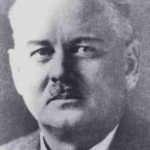
The TVMA held a Special General Meeting on 12 January 1909 when the new laboratory at Onderstepoort was officially opened. With political Union looming in 1910, one item that was discussed was the formation of a Central Federated Veterinary Medical Association for the whole of South Africa, or even southern Africa. At a TVMA meeting on 23 June 1910 there was general agreement that a South African Veterinary Medical Association should be formed out of the TVMA, CVMS and NVMA. However, nothing materialised for a further 9 years.

It was only in 1919 that the TVMA took the initiative to revive the matter, and the South African Veterinary Association (SAVA) was inaugurated on 1 April 1920 on the strength of a unanimous decision taken at a General Meeting of the TVMA held in the Board Room of the Witwatersrand Agricultural Society in Johannesburg. The TVMA would ‘sacrifice its identity’, handing over all the funds at its disposal to the new SAVA, whilst its existing office bearers would, in the interim, be officers of the SAVA.

Its first President was RE Montgomery, but the Vice-President, CE Gray, acted as President in his absence at what was also the first de facto AGM of the SAVA. The 79 member strong SAVA therefore represented the amalgamated Transvaal, Cape and Natal veterinary medical bodies. At the time the Natal and Cape organizations, although inactive, still possessed funds that were later transferred to the SAVA. The name of the SAVA was changed to the South African Veterinary Medical Association (SAVMA) at a General Meeting on 11 April 1922. It only reverted back to its current name almost 50 years later, in 1971.

Through intensive and prolonged lobbying, the SAVMA eventually succeeded in having the Veterinary Act (Act No. 16 0f 1933) promulgated, Hjalmar Reitz launching it through the Union Parliament as a private motion. The SAVMA’s early goal of having the professional status of the South African veterinarian legally entrenched had finally been realised.

Anthea Fleming was the first woman to be elected as President of the SAVA. SAVA membership rose from the 79 in 1920 to 350 in 1953, 900 in 1978, 1400 in 1996 and currently exceeds 1650 members. The growing membership required increasing administrative involvement and capabilities. Whereas an Honorary Secretary managed the affairs of the Association until 1960, a full time Secretary was appointed the following year. Tienie Roos was the first Director of the SAVA, his appointment dating from 1976. The SAVA’s officials have now served their profession for more than 90 years with an unselfish dedication that is remarkable by any standards.

In the beginning the venue of the office of the Association changed with the office-bearing Honorary Secretary: names like Mike de Lange, Gene Weiss and Gerard Sutton, all working from their own offices, come to mind. In the 1960s, 1970s and early 1980s offices at the city end of Esselen Street in Sunnyside, the Tobacco Board in Edmund Street, Central Street in the CBD and once again the Tobacco Board were utilised when full time secretaries became the vogue. In the early 1980s the Board Room of the Meat Board was used for Federal Council meetings, but the need for an own ‘home’ with a council chamber was mounting.

This dream was brought to fruition when Prof WO Neitz bequeathed his home in Brooklyn to the SAVA in 1979. A usufruct agreement in favour of Prof. Neitz’s sisters delayed utilisation of the property for several years. But it provided financial security for purchasing an own house-office in Monument Park. When the Neitz property was eventually sold, the money was used to build the WO Neitz council chamber – inaugurated in 1997 – as an extension of the Monument Park house. Finally, in 2008, the existing building in Monument Park was demolished and a brand new office building constituting the New Vet House, which was inaugurated on 18 April 2009, erected on the property.

In the early years of the SAVMA, virtually all its office bearers and members were government veterinarians. As private practice came into its own, particularly after World War II, and the number of members increased the balance of power swung towards private practitioners. The functions of the Association also broadened. This was naturally reflected in the composition of the SAVA’s elected Federal Council. It soon changed from consisting of elected members only to a larger body that also provided for participation of branches, situated in various parts of the country, and groups. The latter represented the mainly species-based disciplines in which veterinarians tended to specialise such as small animals, production animals, horses, pigs, poultry and wildlife, but some activity-based disciplines are also represented. The number of subcommittees of Federal Council also increased dramatically as its functions multiplied. Currently 11 branches, 9 groups and 15 subcommittees are represented on the Council. Currently the structure of the SAVA is in a state of flux due to the necessity of appointing a Board of Directors in the place of the existing Federal Council to meet new government legal requirements. It will also be necessary to change the Constitution of the SAVA to facilitate these changes.

Some other highlights of its involvement on behalf of its members are the following:

  • The remuneration of veterinarians in the public sector was very actively pursued with the Department of Agriculture, especially through various Ministers, during the presidential term of Dr AP Schutte (1976-1978), which had positive results for state veterinarians at Onderstepoort and in Field Services in the early 1980s.
  • Purposeful liaison with other professions and related associations such as the Medical/Dental Association, the Pharmaceutical Association and Agricultural and Animal Science Societies and, more recently, the Black Veterinary Forum.
  • Very active involvement in the affairs of the statutory South African Veterinary Board and South African Veterinary Council, its successor, by virtue of constant promotion of the status and career interests of veterinarians as professional scientists.
  • Establishment of the South African Veterinary Foundation which supports various worthy causes, such as high priority research, that are in the interest of the profession in its widest sense.

The history of the SAVA has never been static. New objectives are continually being identified during regularly held strategic planning sessions by the current policy-making body, the Federal Council. Implementation of future decisions will continue to shape the history of this erudite and dynamic profession.

Board of Directors

Dr Ziyanda Qwalela
President
Dr Melvyn Greenberg
President Elect
Sonja Ludik
Interim General Manager
Dr David Pretorius
Director of Finance
Dr Angela Rogers
SAEVA Representative
Dr Didi Claassen
RuVASA Representative
Dr Erik Verreynne
Wildlife Group Representative
Scroll to Top